
The study of densities governs how physical objects behave, dictating whether they sink, float, or defy our intuitive understanding of weight. In materials science, understanding densities allows engineers to design spacecraft shields, high-performance aircraft, and ultra-light architectural wonders. By examining the fundamental relationship between mass and volume, we unlock the secrets behind why some substances feel deceptively heavy while others float on a gentle breeze.
Exploring the Extreme Range of Material Densities
When discussing extreme physical measurements, substances like osmium and aerogel stand at opposite ends of the spectrum. Osmium, discovered by English chemist Smithson Tennant in 1803 in London, holds the crown for the highest naturally occurring element on Earth, boasting a staggering density of 22.59 g/cm³. Because of its extreme rarity and durability, osmium commands a steep market price of roughly $12,000 per kilogram.
At the opposite extreme lies silica aerogel. Invented by chemical engineer Samuel Stephens Kistler in 1931 in California, aerogel is often poetically described as "frozen smoke." It consists of roughly 99.8% air, making its solid structure remarkably fragile yet hyper-insulating. To visualize this, comparing aerogel's lightness to holding a wisp of morning fog in your palm illustrates just how extreme material mass and volume relationships can vary.
Calculating and Managing Scale Densities in Modern Engineering
Controlling densities is critical when manufacturing modern consumer goods and aerospace components. Engineers often manipulate the crystalline lattice of metals through thermal processing and mechanical compaction to increase structural integrity. For instance, modern titanium alloys used in aerospace manufacturing undergo precise cooling cycles lasting up to 48 hours to eliminate microscopic porosity.
Another fascinating application involves cosmic-scale densities, such as those found inside neutron stars. A single teaspoon of neutron star material would weigh approximately 6 billion tons, a stark illustration of extreme atomic packaging. In this realm, intense gravitational forces crush atoms so tightly that electrons merge with protons, transforming ordinary matter into a hyper-dense celestial soup.
Whether you are analyzing the buoyancy of a cargo ship or engineering high-tech thermal insulation, mastering the principles of mass, volume, and specific gravity remains essential for technological progress.
Why Digital Literacy Is the Defining Skill of the 21st Century
Digital literacy has evolved far beyond basic typing and computer navigation into a fundamental prerequisite for modern civic participation and economic mobility. In today's hyper-connected society, navigating an endless sea of information requires sophisticated critical thinking and rapid source verification. According to recent educational research from the Pew Research Center, over eighty-five percent of employers now consider digital adaptability a core competency for entry-level positions. Without these advanced skills, young people risk being left behind in an increasingly automated and data-driven global workforce. Therefore, educational systems must prioritize digital competence with the same rigor traditionally reserved for mathematics and reading.
Frequently Asked Questions
How does early digital literacy impact future career readiness?
Early digital literacy acts as a powerful catalyst for long-term professional success by instilling computational thinking and adaptability from a young age. Students who engage regularly with digital tools develop an intuitive grasp of software ecosystems, collaborative platforms, and basic data analysis before entering the workforce. Data from the World Economic Forum indicates that tech-adjacent skills will influence nearly all job growth over the next decade, making early exposure vital. Furthermore, children who learn to critically evaluate online content become more resilient problem-solvers who can easily pivot as new technologies emerge. Ultimately, integrating technology into early education bridges the gap between passive consumption and active, innovative creation.
What are the most effective ways to spot online misinformation?
Combating online misinformation requires a methodical approach centered on lateral reading and rigorous source triangulation. Instead of merely scanning a single website for credibility clues, users should open multiple tabs to verify claims across established, independent journalistic outlets. Statistics show that nearly sixty percent of teenagers regularly encounter fake news on social media feeds, highlighting the urgent need for systematic fact-checking habits. Additionally, checking primary sources and examining author credentials helps separate objective reporting from emotionally manipulative clickbait. Cultivating this healthy skepticism protects individuals from manipulation and fosters a healthier, more truth-driven digital public square.
How can schools balance screen time with offline engagement?
Balancing digital instruction with offline engagement requires a intentional curriculum design that treats technology as a targeted tool rather than an all-day default. Schools achieve this healthy equilibrium by designating specific blocks for coding, research, and digital creation while preserving traditional hands-on lab work and discussion. Research published by the American Academy of Pediatrics emphasizes that structured, purposeful screen use yields significantly better cognitive outcomes than unstructured scrolling. By encouraging physical collaboration, outdoor exploration, and tactile learning alongside digital projects, educators ensure well-rounded student development. This intentional moderation prevents digital fatigue and teaches students how to maintain a sustainable, healthy relationship with technology throughout their lives.
Mastering the Digital Landscape Requires Intentional Action
Navigating the modern digital ecosystem is not merely about keeping pace with rapid technological advancements, but about actively steering our own cognitive and social evolution. When we treat digital literacy as a dynamic, lifelong practice rather than a static checkbox, we transform ourselves from passive data consumers into empowered digital citizens. The choices we make today regarding online ethics, information verification, and screen boundaries will fundamentally shape the cultural and professional landscape of tomorrow. We must therefore reject complacency, embrace rigorous critical thinking, and demand higher standards for the digital spaces we inhabit daily. True empowerment lies in recognizing that technology serves human flourishing, and we retain the ultimate responsibility to direct its power toward meaningful, positive change.
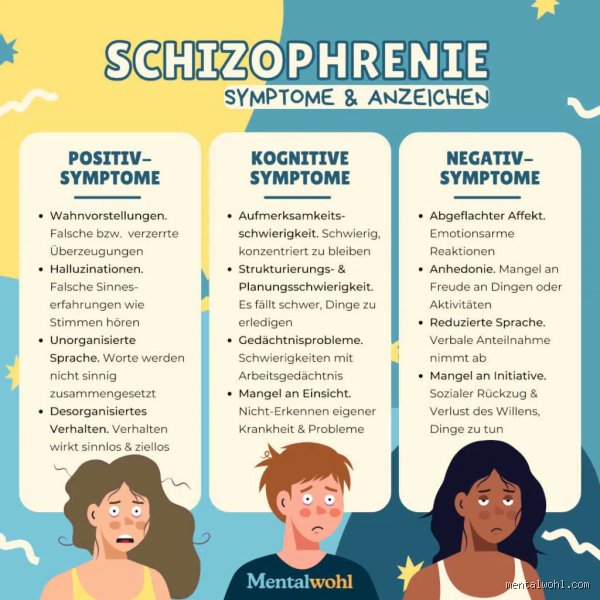
💡 Wichtige Punkte
- Warum bricht Schizophrenie aus? - Was prinzipiell eine sinnvolle Reaktion in Stress- und Gefahrensituationen ist, kann bei Personen, die anfällig für Schizophrenie sind, zu psychotis
- Wie bricht Schizophrenie aus? - Die Diagnose Schizophrenie trifft die Patienten oft wie aus heiterem Himmel.
- Wann bricht Schizophrenie aus? - Meistens beginnt die Krankheit schon in jungen Jahren, bei Männern zwischen dem 15. und 25. Lebensjahr, bei Frauen etwas später.
- In welchem Alter bricht Schizophrenie aus? - Die Schizophrenie beginnt typischerweise in der Zeit von Mitte der Pubertät bis Mitte 30, mit dem häufigsten Einsetzen zwischen 20 und 30 Jahren.
- Wann bricht Schizophrenie bei Frauen aus? - Frühzeitige Diagnose verbessert Behandlungsaussichten Erst nach der Diagnose stellen viele fest, dass ein ungewöhnliches Verhalten lange vor Ausbruc